
Sections
Insulating glass units (IGUs) are at the heart of today's high-performance glazing systems, helping control heat transfer, improve occupant comfort and support energy-efficient building design.

Many people focus primarily on the glass itself when evaluating performance. However, an IGU is much more than two panes of glass separated by air. The performance of an IGU depends on several interconnected components working together as a system.

The Glass.
The most visible component of an IGU is the glass itself. Depending on the application, the glass may be clear, tinted, laminated, low-iron or coated with solar control, low-emissivity (low-e) coatings. Modern low-e glasses play a critical role in reducing heat transfer, improving energy efficiency and managing solar heat gain. When paired with other IGU components, these coatings help create glazing systems capable of delivering exceptional thermal performance while preserving daylight and views.
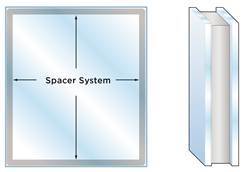
The Spacer System
Located around the perimeter of the IGU, the spacer serves several important functions. It separates the glass lites, maintains the cavity between them and helps support the unit's overall structural integrity. Spacers also influence thermal performance. Older aluminum spacer systems conducted heat more readily, creating thermal bridges at the edge of the glass. Today's warm-edge spacer technologies are designed to reduce heat transfer around the perimeter of the IGU, helping improve overall energy performance and interior comfort.
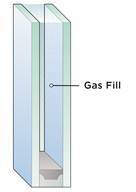
The Gas Fill
The space between the glass lites is often filled with a performance-enhancing gas rather than ordinary air. Argon is the most used gas because it is denser than air and slows heat transfer through the cavity. In some applications, other gases may be used to further improve insulating performance. This gas-filled cavity works in conjunction with low-e coatings and spacer technology to enhance thermal efficiency and support lower heating and cooling loads.
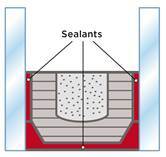
The Sealants
Sealants are among the most underrated components of an IGU. Primary and secondary sealants help keep moisture out and insulating gas in. Without an effective seal, an IGU can lose gas over time, reducing performance and potentially leading to condensation issues. The longevity and durability of an IGU are closely tied to the performance of its sealant system, making proper seal selection and fabrication critical to long-term success.
Why Every Component Matters
An IGU performs best when all its components work together. High-performance glass alone cannot maximize energy efficiency if the spacer system, gas fill or sealants are not designed to support the overall system.
When properly engineered, an IGU can:
- Reduce heat transfer
- Lower heating and cooling costs
- Improve occupant comfort
- Minimize condensation potential
- Enhance daylighting while controlling solar heat gain
- Support sustainability and energy-efficiency goals
Modern IGUs demonstrate that building performance is about how multiple technologies work together. By understanding the key elements of an IGU, project teams can make more informed glazing decisions and specify systems that deliver lasting value throughout the life of a building.