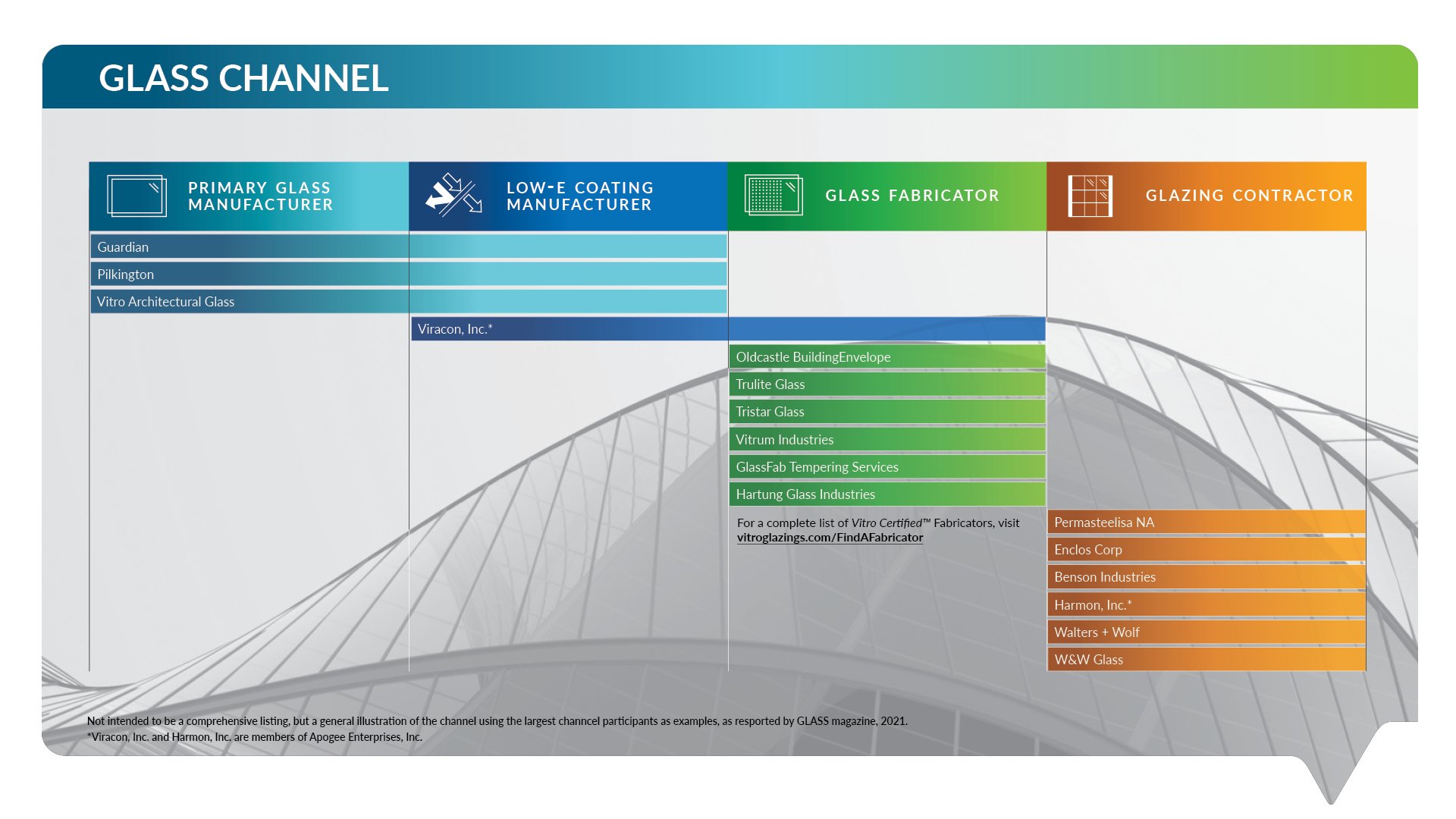
Architectural glass is one of the most visible materials in the built environment, yet few people realize how many companies and processes are involved before a piece of glass is installed in a building. From raw glass production to final installation, the North American glass industry relies on a complex supply chain known as the North American Glass Channel. Understanding this channel can help architects, specifiers, contractors and building owners better navigate the specification and procurement process.
The process begins with float glass manufacturers, who produce large sheets of flat glass. Those glass lites are then sent to fabricators, where they may be tempered, laminated, coated or assembled into insulating glass units (IGUs) to meet specific project requirements.
Modern glazing systems often combine multiple technologies, including low-emissivity (low-e) coatings, laminated glass and insulating glass construction, to enhance energy efficiency, daylighting, safety and occupant comfort. Proper fabrication is essential to ensuring these performance goals are achieved.
Once fabricated, glass products are delivered to glazing contractors and installers, who integrate them into façades, windows, storefronts and curtain walls. Proper handling and installation are critical to long-term performance.
Understanding the North American Glass Channel can help project teams make more informed decisions about specification, scheduling and performance. Because architectural glass often passes through multiple organizations before reaching the job site, collaboration and communication are essential to successful project outcomes.
The channel also demonstrates the highly specialized nature of the glass industry. Manufacturers, fabricators, distributors and contractors each bring unique expertise that contributes to the performance, appearance and longevity of the finished glazing system.