

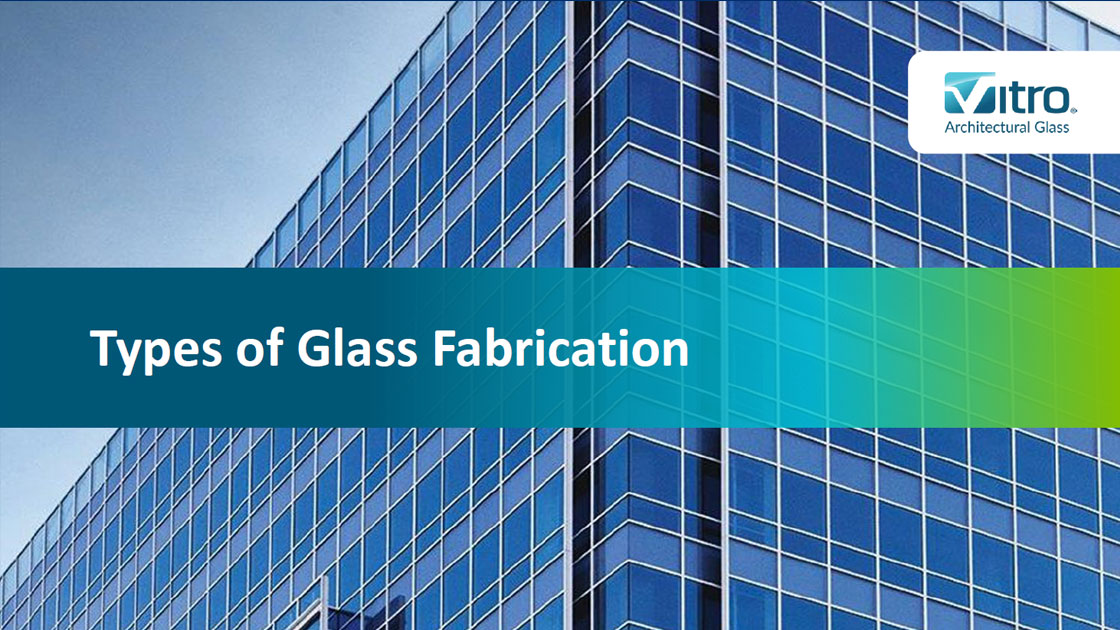
Glass fabrication, an important part of glass specification, transforms standard float glass into specialty products designed to meet specific performance, safety, energy and aesthetic goals. Depending on a project's requirements, fabricators can modify glass in several ways to improve insulation, security, appearance and functionality.
There are several basic types of fabricated glass, which all offer unique pros and cons. Types of glass fabrication include insulating glass units (IGUs), laminated glass, opacified glass, decorative glass and more.
Insulating Glass Units (IGUs)
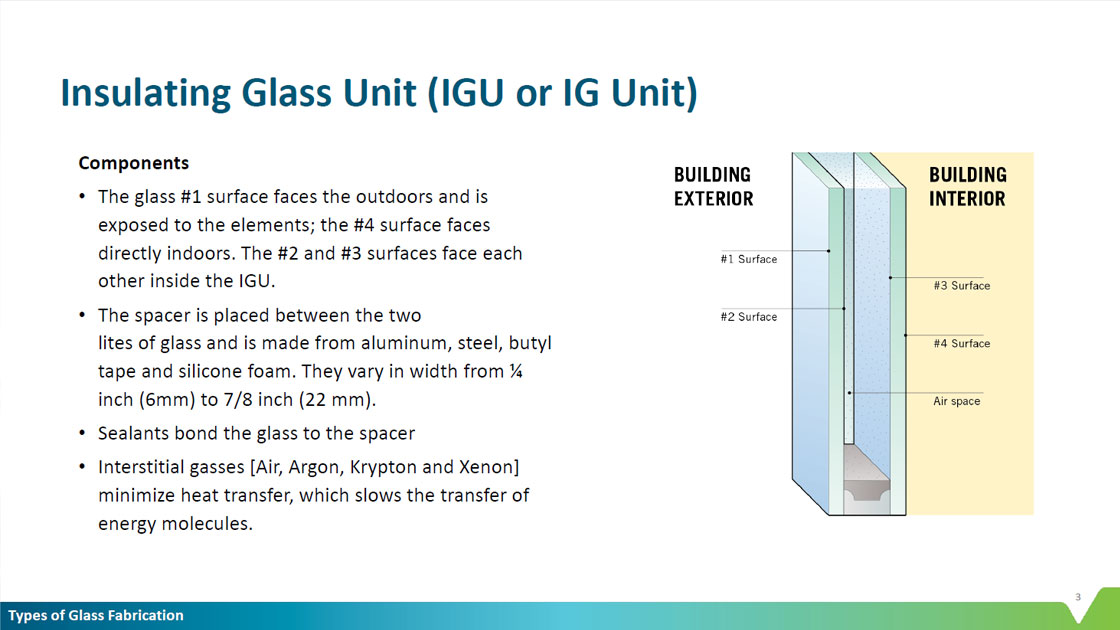
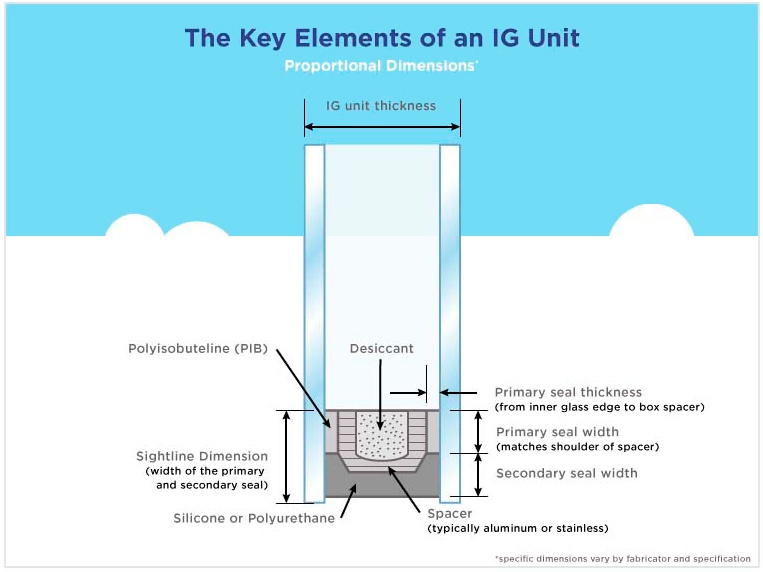
Insulating glass units, commonly called IGUs, are created by sealing two or more panes of glass together with a spacer and an air or gas-filled cavity between them. This construction improves thermal performance and helps reduce heat transfer, making buildings more energy efficient and comfortable for occupants. IGUs are a foundational technology in modern high-performance façades.
There are several key elements that impact the performance of an IGU. These include the primary seal thickness and width, secondary seal width, the spacer and the desiccant.
Laminated Glass
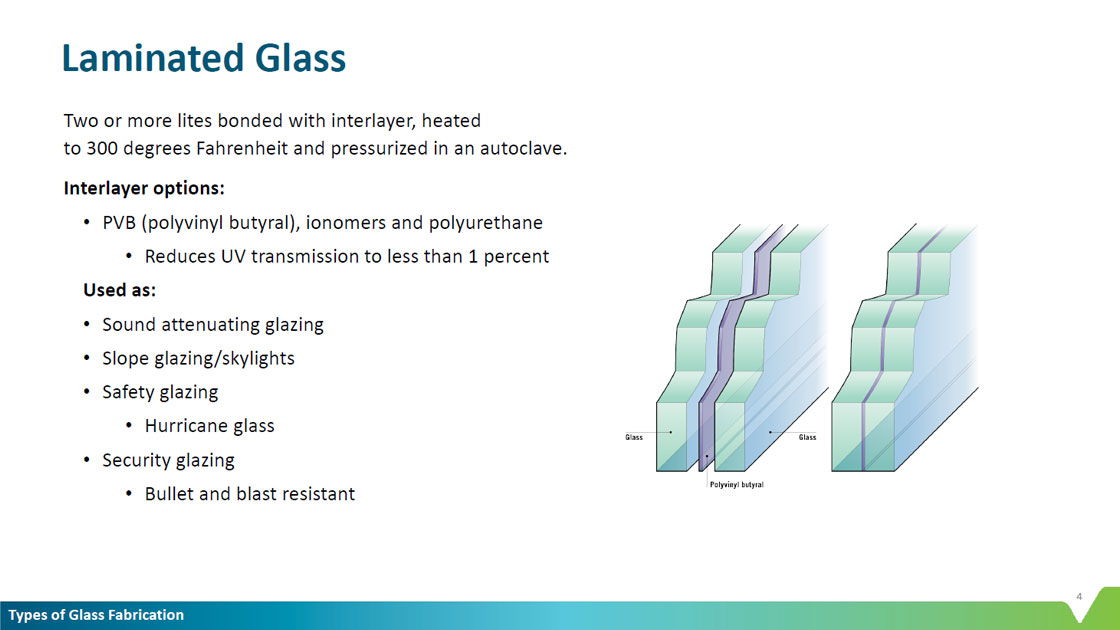
Laminated glass consists of multiple glass layers bonded together with a plastic interlayer. If the glass breaks, the interlayer helps hold the fragments in place. This fabrication method is commonly used for safety glazing, sound control, security applications, skylights, hurricane-resistant glazing and blast-resistant systems. It can also block a significant amount of UV radiation.
Opacified (Spandrel) Glass
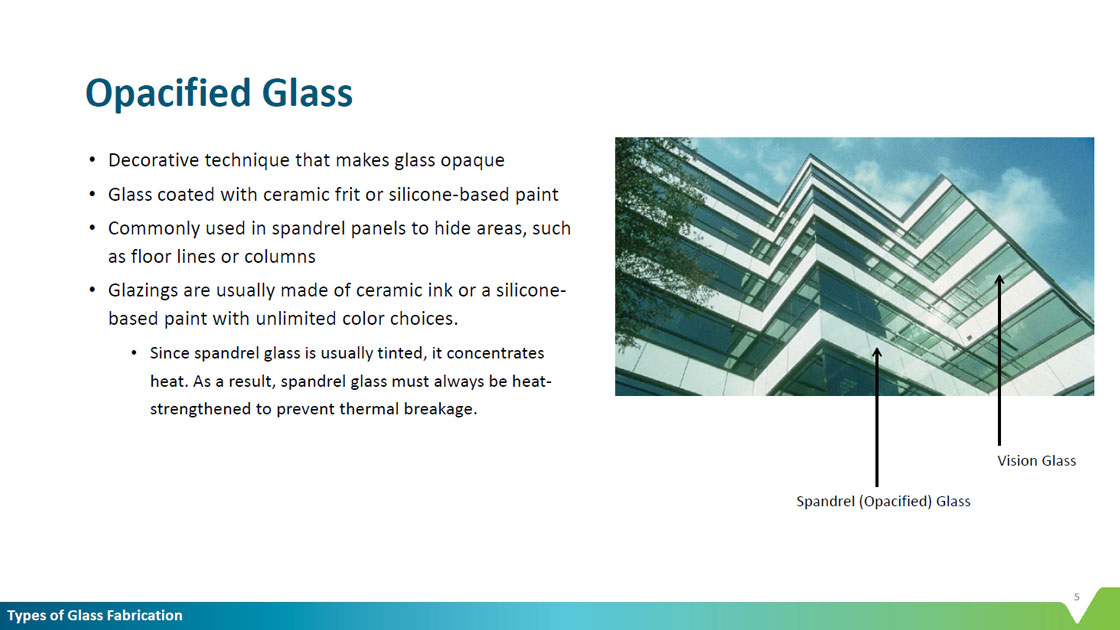
Opacified glass is produced by applying an opaque coating, such as ceramic frit or silicone-based paint, to the glass surface. The result is a non-transparent panel that conceals building components like floor slabs, insulation and mechanical systems while maintaining a consistent exterior appearance. Opacified glass is widely used in spandrel areas of curtainwall systems.
Decorative Glass
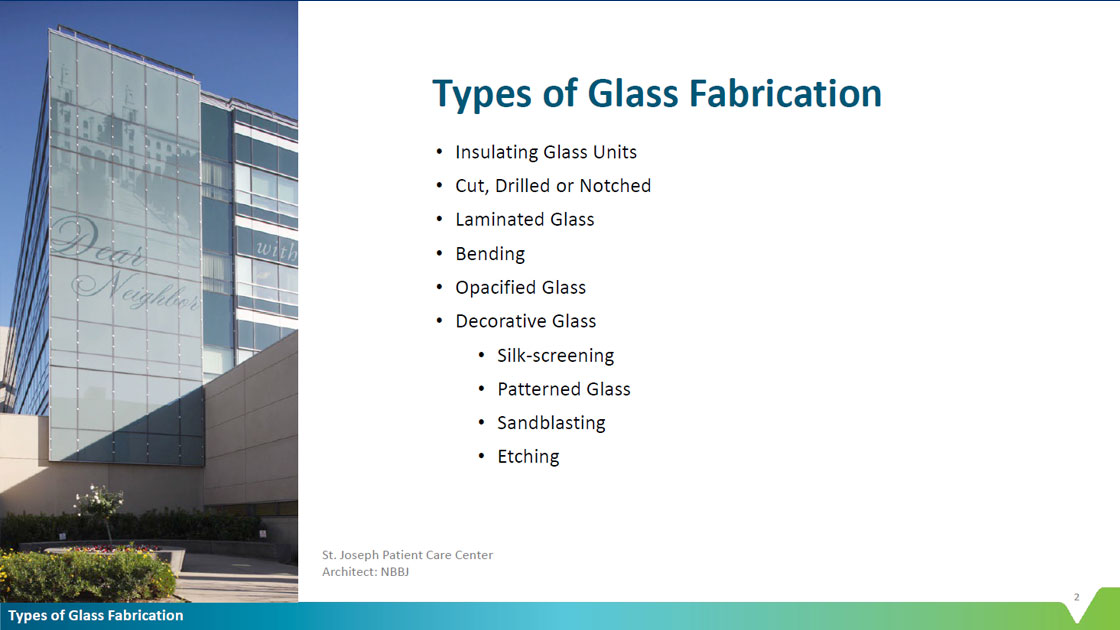
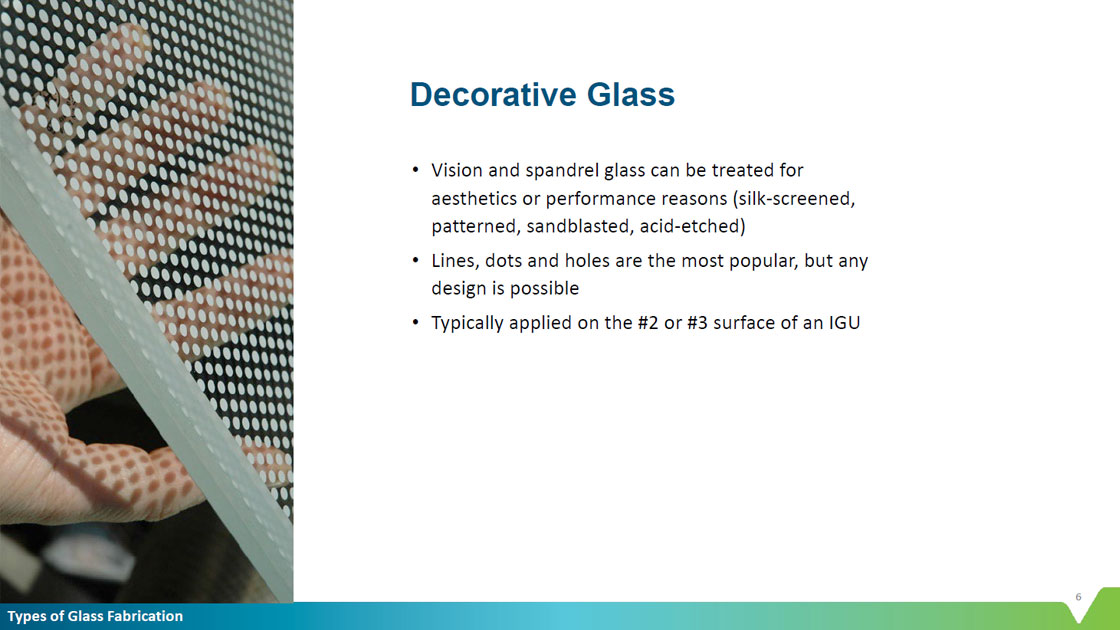
Decorative fabrication techniques allow glass to become a design feature rather than simply a building enclosure material. Through methods such as printing, etching, fritting, texturing and coloring, designers can create custom visual effects that support branding, privacy and artistic expression. Decorative glass is often used in lobbies, educational facilities, healthcare environments and public spaces.
Why Fabrication Matters
The fabrication process can dramatically change how glass performs. A fabricated product may provide better energy efficiency, improved safety, greater durability, enhanced acoustics or unique visual characteristics compared with standard glass. Because each fabrication type offers distinct benefits, understanding these options helps architects and specifiers select the right glass solution for each application.
Featured Project: Fort Calgary Edges | Calgary, Alberta, Canada
Product: Starphire Ultra-Clear® Glass | Glass Fabricator: Goldray Glass | Photography Courtesy of Goldray Glass