


Sections:
- What is INSLIP?
- What is INSLOP?
- Matching the Configuration to the Application
- The Importance of Proper Specification
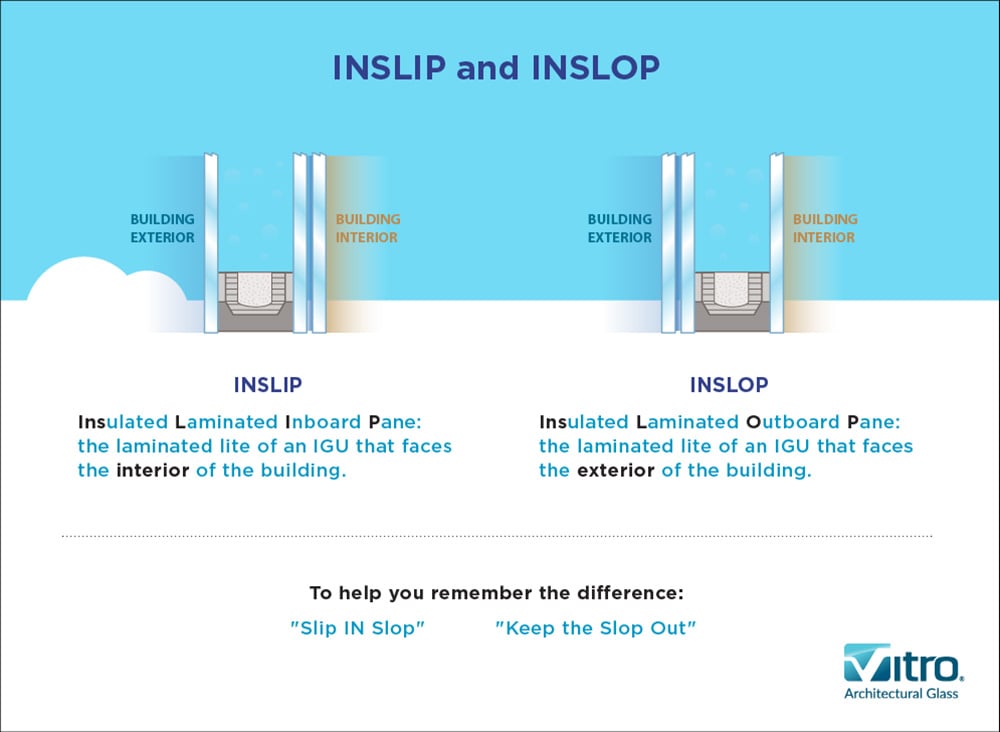
Placement of a laminated lite within an insulating glass unit (IGU) is key to how its glazing system will perform. INSLIP and INSLOP are two commonly used terms to help designers position laminated glass properly.
When specifying insulating glass units (IGUs), selecting the right glass type is only part of the equation. Equally important is determining where laminated glass is positioned within the assembly. Laminated glass consists of two or more pieces of glass permanently bonded together with an interlayer. Because the glass remains intact when broken, laminated glass is frequently specified for applications requiring enhanced safety, security, sound control or impact protection. The placement of a laminated lite can significantly influence how a glazing system performs. To help communicate this placement, the glass industry commonly uses two terms: INSLIP and INSLOP.
What Is INSLIP?
INSLIP stands for Insulating Laminated Inboard Panel. In this configuration, the laminated glass is positioned on the interior side of the insulating glass unit (IGU).
An INSLIP configuration is commonly used when the glazing system's primary goal is to enhance occupant safety, improve acoustical performance or provide interior security benefits. By locating the laminated glass toward the building interior, designers can leverage the sound-dampening characteristics and retention properties of laminated glazing while maintaining the thermal performance benefits of the IGU.
What Is INSLOP?
INSLOP stands for Insulating Laminated Outboard Panel. In this arrangement, the laminated glass is located on the exterior side of the IGU.
This configuration is often specified when exterior impact resistance, storm protection or other environmental considerations are important. By positioning the laminated lite toward the outside, the glazing system can better address specific project requirements related to weather events, impact protection or exterior security concerns.
Matching the Configuration to the Application
Neither INSLIP nor INSLOP is inherently better than the other. The optimal configuration depends on the project's specific performance objectives, building location, code requirements and design intent. Because each project presents unique challenges, the placement of laminated glass should be evaluated alongside the broader design requirements of the building.
The Importance of Proper Specification
Properly identifying whether a project requires an INSLIP or INSLOP configuration helps ensure that the fabricated IGU delivers the intended performance. Miscommunication during specification or fabrication can result in a unit that does not fully satisfy the project's safety, security or performance criteria.
By understanding these two terms and their implications, architects, consultants and glazing contractors can make more informed decisions and help ensure that IGUs perform as intended throughout the life of the building.