


Sections
- What is Acid-Etched Glass?
- How Acid-Etching Affects Light
- Why Use a Low-Iron Glass Substrate?
- Low-Iron Acid-Etched vs. Standard Acid-Etched Glass
- How Does Low-Iron Acid-Etched Glass Affect Light, Privacy and Perception?
- Where Low-Iron Acid-Etched Glass Is Used
- How Low-Iron Acid-Etched Glass Combines with Other Glass Technologies
- Related Terms
- Frequently Asked Questions
Acid-etched glass is a type of decorative glass with a uniformly textured surface that diffuses light, softens views and reduces glare. When the substrate is low-iron glass, the result is a more color-neutral, refined and visually consistent finish than standard acid-etched glass.
Low-iron acid-etched glass preserves more of the true tone of daylight and adjacent finishes while still providing privacy, glare control and a clean material aesthetic. This page explains what acid-etched glass is, why a low-iron substrate improves its appearance and how low-iron acid-etched glass is used across offices, healthcare, education, hospitality, museums and other interior environments where light quality, transparency and design intent shape the project.
What Is Acid-Etched Glass?
Acid-etched glass is a type of decorative glass with a uniformly textured surface produced by treating one side of the glass with an acid bath. The treatment creates a fine, consistent matte finish that diffuses light, reduces glare and softens views without fully blocking visibility.
In architectural glazing, acid-etched glass is specified when designers want to balance:
- Privacy and openness
- Daylight transmission and glare control
- Visual softness and clean material appearance
- Decorative finish and structural performance
Unlike sandblasted glass, which can vary in texture and is more prone to fingerprints and staining, acid-etched glass produces a uniform, durable surface that performs consistently across large panels and across multiple panels in the same project.
How Acid-Etching Affects Light
The matte surface of acid-etched glass scatters incoming light rather than transmitting it directly. This produces several design effects:
- Light diffusion that softens hot spots and direct beams
- Glare reduction in spaces with high daylight exposure
- Visual privacy without fully blocking light
- Even illumination of interior surfaces
- Reduced reflectivity compared to clear glass
These properties make acid-etched glass a common specification for partitions, doors, facades, signage and feature walls where designers want light and openness without the visual sharpness of clear glass.
Why Use a Low-Iron Glass Substrate?
The visual quality of acid-etched glass depends not only on the surface treatment but also on the glass beneath it. When acid-etching is applied to standard clear glass, the underlying green tint introduced by iron oxide is still visible. The texture diffuses the light, but the color shift remains.
When acid-etching is applied to a low-iron glass substrate, the result is significantly different.
Low-iron acid-etched glass benefits from:
- A color-neutral glass base that preserves the natural tone of daylight
- Higher visible light transmittance (VLT) than standard clear acid-etched glass
- A cleaner, more refined appearance with less green cast
- More accurate rendering of adjacent finishes, materials and lighting
- A more consistent appearance across large panels and oversized glass applications
For a foundational explanation of what low-iron glass is and how it differs from standard clear glass, see the main Low-Iron Glass page.
Why Does This Matter in Design?
Designers and architects often select acid-etched glass for spaces where material quality, light quality and detail matter. In these environments, even a subtle green tint can affect:
- Perception of interior color palettes
- Reading of natural materials such as wood, stone and metal
- Brand or institutional identity expressed through finishes
- Visual consistency between adjacent glazing types
- The overall sense of refinement in the space
Low-iron acid-etched glass provides a more neutral canvas for these design intentions.
How Does Low-Iron Acid-Etched Glass Compare to Standard Acid-Etched Glass?
Both products share the same surface treatment, but they perform differently as a design material. The differences are visual rather than structural and become more visible at scale, in thicker lites and in spaces with strong daylight.
| Characteristic | Low-Iron Acid-Etched Glass | Standard Acid-Etched Glass |
|---|---|---|
| Substrate | Low-iron glass | Standard clear float glass |
| Color | Color-neutral with minimal tint | Visible green tint, more pronounced at thicker dimensions |
| Clarity Through the Etch | Cleaner, more refined matte appearance | Matte finish carries a subtle green cast |
| Light Diffusion | Even, color-true diffusion | Diffused light with a green color shift |
| Color Rendering of Adjacent Surfaces | More accurate | Slight green influence on adjacent finishes |
| VLT | Higher VLT than standard acid-etched glass | Lower VLT, reduced further by thickness |
| Edge Appearance | Near colorless | Visibly green edge |
| Typical Applications | Offices, healthcare, education, hospitality, museums, luxury interiors | General partitions and back-of-house glazing where color neutrality is not critical |
For full visible light transmittance comparison data across thicknesses, see our Guide to Low-Iron Glass.
How Does Low-Iron Acid-Etched Glass Affect Light, Privacy and Perception?
Acid-etched glass is often selected because of how it shapes the experience of a space. A low-iron substrate amplifies these design effects by preserving the true character of the light and the materials behind it.
Light Diffusion Without Color Shift
Standard acid-etched glass diffuses light but also introduces a green cast through its iron-rich substrate. Low-iron acid-etched glass diffuses light while preserving its true color. This is particularly important in:
- Daylit interiors where natural light is part of the design
- Spaces with warm or neutral color palettes
- Environments that rely on color-accurate finishes
- Projects where multiple types of glazing are used together
Privacy With Maintained Daylight
Acid-etching provides visual privacy without fully blocking light. A low-iron substrate makes this trade-off more efficient by allowing more visible light transmittance through the diffused surface, which means:
- More daylight reaches interior spaces
- Less reliance on artificial lighting
- Greater openness in privacy zones
- Improved sense of brightness in enclosed areas
Glare Control and Visual Comfort
The matte surface of acid-etched glass softens direct light and reduces glare, which supports visual comfort in workplaces, classrooms and healthcare environments. A low-iron substrate preserves color accuracy at the same time, which is important for:
- Screen-based work environments
- Patient and care environments
- Learning environments with mixed lighting
- Hospitality spaces designed around mood and ambiance
Design Consistency
In large projects with multiple types of glazing, mixing standard acid-etched glass with low-iron architectural glass can produce visible color shifts between panels. Using low-iron acid-etched glass maintains consistency across:
- Adjacent vision glazing
- Partitions and doors
- Storefronts and entries
- Skylights and atrium glazing
- Interior glass partitions that connect to facade glazing
Where Is Low-Iron Acid-Etched Glass Used?
Low-iron acid-etched glass is used in environments where design quality, color accuracy and light quality influence the experience of the space. The matte surface supports privacy and glare control while the ultra-clear substrate preserves design intent.
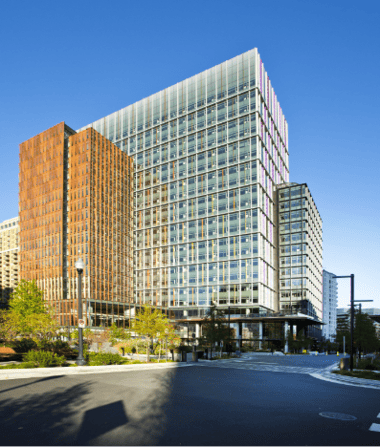
Amazon HQ2, South Arlington, VA
Products: Solarban® 72 Starphire® Glass | Architect: ZFG Architects | Glass Fabricators: Oldcastle BuildingEnvelope®, Cristacurva | Glazing Contractor: Harmon Inc. | General Contractor: Clark Construction Group Inc. | Photographer: Jim Cunningham
Offices
Modern office design uses glass to create open, daylit environments while still providing privacy for meeting rooms, focus spaces and executive areas. Low-iron acid-etched glass allows daylight to move through workspaces while softening direct views and reducing glare on screens.
Why Low-Iron Acid-Etched Glass Is Specified:
- Maintains daylight quality across open floor plates
- Reduces glare in screen-based environments
- Provides privacy without darkening enclosed rooms
- Preserves the true color of interior finishes and brand environments
- Maintains consistency with adjacent vision glass at the facade
Common Applications:
- Conference room partitions
- Executive office walls
- Focus rooms and phone booths
- Branded feature walls
- Office entries and lobbies
Healthcare
Healthcare environments balance privacy, infection control, daylight access and material durability. Low-iron acid-etched glass supports these priorities while preserving color accuracy, which is important for clinical observation and patient experience.
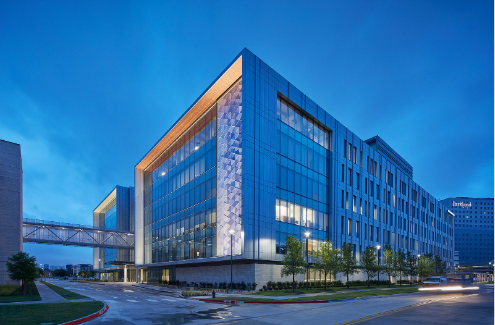
Parkland Health and Hospital System Moody Outpatient Center, Dallas TX
Product: Solarban® 90 Acuity® Glass | Architect: HKS | Glass Fabricator: NWI (now Hartung Glass) | Glazing Contractor: IWR North America | Photographer: Tom Harris
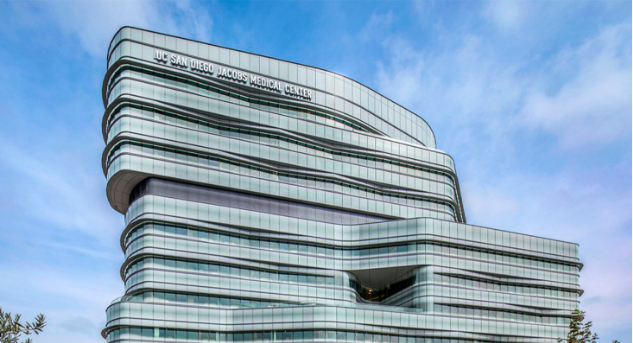
UCSD Jacobs Medical Center, La Jolla, CA
Products: Solarban® 70 Starphire Ultra-Clear® Glass, Solarban 72 Glass | Architect: Cannon Design Architects | Vitro Certified® Fabricator | Glazing Contractor: Enclos | Photographer: Tom Kessler
Why Low-Iron Acid-Etched Glass Is specified:
- Provides privacy in patient rooms, exam rooms and consultation areas
- Maintains daylight access in interior corridors
- Preserves accurate color rendering of skin tones and finishes
- Offers a clean, durable surface that supports hygiene protocols
- Reduces glare in spaces with mixed daylight and artificial lighting
Common applications:
- Patient room partitions and sliding doors
- Consultation room walls
- Nurse station and administrative partitions
- Wayfinding and signage glazing
- Daylit corridors and waiting areas
Education
Education environments rely on daylight, visual comfort and material clarity to support learning. Low-iron acid-etched glass allows daylight to enter classrooms and shared spaces while reducing glare and supporting visual privacy where needed.
Why Low-Iron Acid-Etched Glass Is Specified:
- Supports daylit learning environments
- Reduces glare on screens, boards and projection surfaces
- Provides privacy in counseling and administrative areas
- Maintains color accuracy of interior finishes and student work
- Supports consistent design across classrooms, corridors and shared spaces
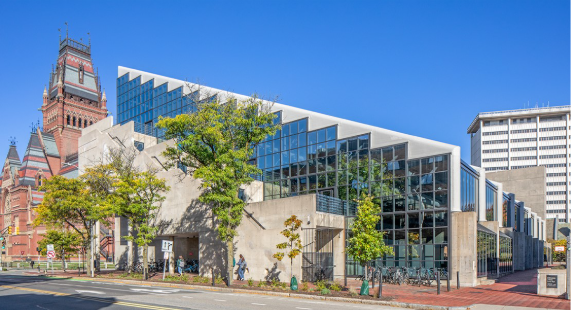
Harvard University, Gund Hall, Cambridge, MA
Products: VacuMax™ Vacuum Insulating Glass (VIG) Solarban® 90 Acuity® Glass, VacuMax™ VIG Solarban® R100 Acuity® Glass, Solargray® Glass
Architect: Bruner/ Cott Architects | Glass Fabricator: Oldcastle BuildingEnvelope® | Glazing Contractor: A&A Window Products Inc.
General Contractor: Shawmut Design & Construction | Photographer: Tom Kessler
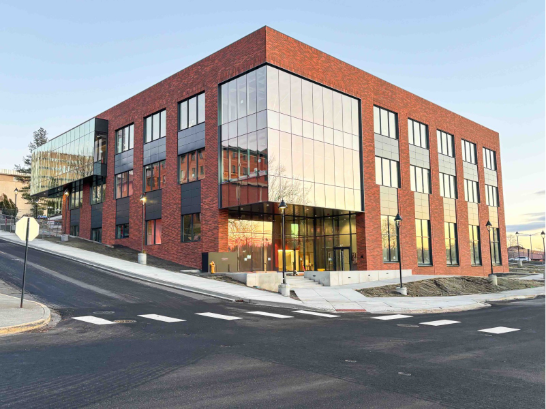
Schweitzer Engineering Hall at Washington State University, Pullman, WA
Products: Solarban® 72 Acuity® Glass, BirdSmart® Speck 6 2x2 Shift (1) Solarban® 72 (2) Acuity® + Acuity® Glass | Architects: ZFG Architects, Miller Hull Partnership LLP | Glass Fabricator: Vitrum Industries Ltd.
Glazing Contractor: Sargent Construction | General Contractor: Lease Crutcher Lewis | Photographer: Chris Dailey
Common Applications:
- Classroom partitions and doors
- Library and study area glazing
- Administrative offices
- Counseling and small-group rooms
- Corridors and shared learning spaces
Hospitality
Hospitality design depends on the atmosphere, material quality and perception of light. Low-iron acid-etched glass supports refined interiors while diffusing daylight and softening views.
Why Low-Iron Acid-Etched Glass Is Specified:
- Preserves the true color of interior palettes, finishes and brand environments
- Diffuses daylight in lobbies, lounges and dining spaces
- Provides privacy in guest-facing areas without darkening the space
- Maintains a clean, refined aesthetic at large scale
- Complements warm material palettes such as wood, stone and textiles
Common Applications:
- Guest room partitions and sliding doors
- Bathroom and wet area glazing
- Lobby and lounge feature walls
- Restaurant and bar partitions
- Spa and wellness environments
Museums and Cultural Spaces
Museums, galleries and cultural institutions depend on color accuracy and controlled light. Low-iron acid-etched glass preserves the integrity of displayed objects while diffusing light and reducing glare on cases, vitrines and signage.
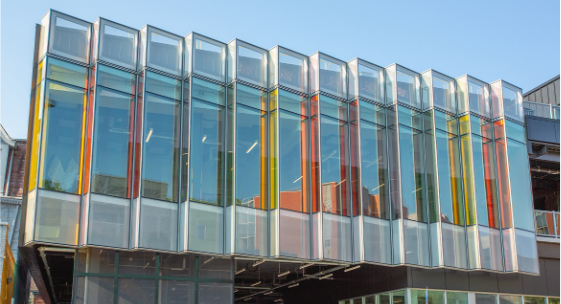
As a devoted supporter of the Pittsburgh Glass Center (PGC), Vitro donated
Solarban® 72 Starphire® glass and VacuMax™ VIG to the landmark renovation and expansion of PGC. (Photography: Jim Cunningham)
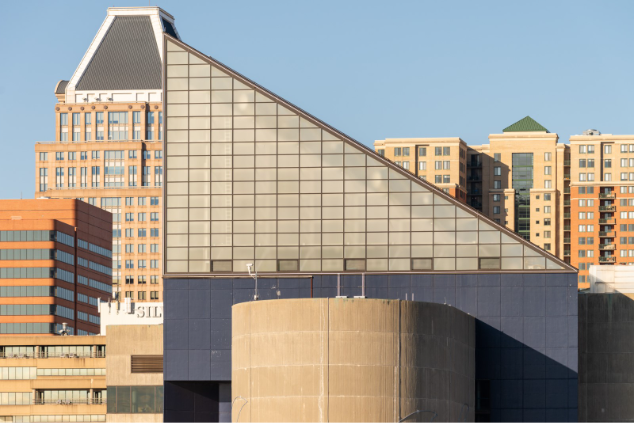
The National Aquarium’s glass pyramid was upgraded with Solarban® 60 Starphire® glass to optimize daylight, environmental control and visitor comfort. (Photography: Federal Hill Photography, LLC)
Why Low-Iron Acid-Etched Glass Is Specified:
- Preserves color rendering of artifacts, artworks and finishes
- Diffuses daylight to reduce direct exposure on sensitive surfaces
- Provides controlled visual privacy for administrative areas
- Maintains design consistency across vision glass and decorative glazing
- Supports a refined, neutral aesthetic across galleries
Common Applications:
- Gallery partitions and openings
- Skylight diffusion in daylit galleries
- Vitrines, display cases and case fronts
- Wayfinding and signage glazing
- Administrative and back-of-house glazing
Luxury Residential and Interior Design
Luxury residential interiors rely on natural light, refined materials and color fidelity. Low-iron acid-etched glass supports these design priorities in privacy zones, daylit interiors and feature elements.
Why low-iron acid-etched glass is specified:
- Preserves the true tone of warm interior palettes
- Provides privacy in bathrooms, dressing rooms and wellness spaces
- Diffuses daylight without darkening interior environments
- Pairs cleanly with stone, wood, metal and textile finishes
- Maintains visual consistency with adjacent low-iron glass vision panels
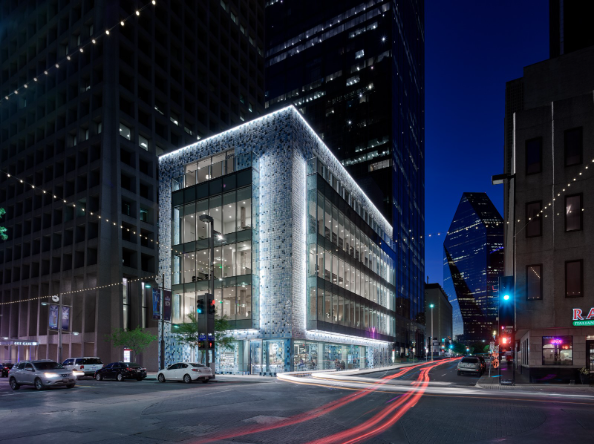
1217 Main St features Solarban® 90 Starphire® glass to deliver exceptional clarity and preserve the
true tones of refined interior finishes. (Photography: Adam Mørk)
Common applications:
- Shower and bathroom enclosures
- Closet and dressing room doors
- Wine room and feature wall glazing
- Stair and atrium enclosures
- Privacy partitions in open-plan interiors
How Is Low-Iron Acid-Etched Glass Combined with Other Glass Technologies?
Low-iron acid-etched glass is a substrate-based product, which means it can be processed and assembled with the most common glass technologies used in commercial glazing and residential design.
Tempered Low-Iron Acid-Etched Glass
Tempered low-iron acid-etched glass can be used in safety glazing applications including doors, partitions, shower enclosures and storefronts.
Laminated Low-Iron Acid-Etched Glass
Laminated low-iron acid-etched glass is used in safety, security and acoustic applications. Specifying an ultra-clear interlayer preserves the color neutrality of the low-iron substrate.
Low-Iron Acid-Etched Glass in IGUs
Acid-etched low-iron glass can be incorporated into insulating glass units for daylight diffusion in skylights, atriums and exterior glazing. For consistent appearance, specify low-iron glass for both lites of the IGU.
Low-Iron Acid-Etched Glass and Bird-Safe Design
Acid-etched patterns are one of the most common strategies in bird-safe glass design because they create visible markers on the glass surface while preserving daylight. A low-iron substrate supports this approach by maintaining color neutrality and clarity in the unetched areas.
For pattern, spacing and standards information, see the Bird-Safe Glass page.
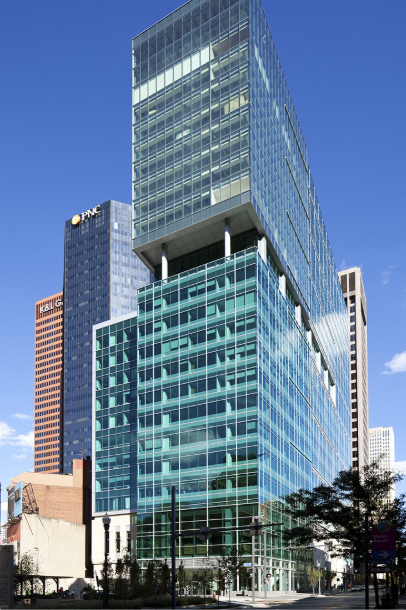
Three PNC Plaza is LEED-certified at the Gold Level,Pittsburgh, PA
Products: Solarban® 70 Glass, Solarban® 60 Glass, Starphire® Glass
Design Architect: Gensler | Local Architect of Record: Astorino
Glass Fabricator: Trulite Glass and Aluminum Solutions | Glazing Contractor: Oldcastle BuildingEnvelope® | Owner/Developer: The PNC Financial Services Group, Inc. | General Contractor: P.J. Dick | Photographer: Jim Schafer
Related Design and Glazing Terms
- Acid-Etched Glass: Decorative glass with a uniformly textured matte surface produced by acid treatment.
- Low-Iron Glass: Architectural glass produced with reduced iron oxide content for higher clarity and color neutrality.
- Ultra-Clear Glass: Another name for low-iron glass, used to describe its high clarity and color fidelity.
- Decorative Glass: A category of glass that includes acid-etched, back-painted, fritted and digitally printed finishes.
- Glass Diffusion: The scattering of light through a textured or treated glass surface to produce softer, more even illumination.
- Visible Light Transmittance (VLT): The percentage of visible light that passes through a glazing system.
- Color Rendering: How accurately a light source reveals the true color of objects.
- Color Neutrality: A glazing characteristic in which transmitted light maintains the original color of daylight without introducing tint.
- Interior Glass Partitions: Non-load-bearing glass walls and doors used to divide interior spaces while preserving light and openness.
- Bird-Friendly Glass: Glass that uses patterns, coatings or other visual markers to reduce bird collisions with windows.
Frequently Asked Questions About Designing with Low-Iron Acid-Etched Glass
Does acid-etching reduce transparency?
Acid-etching reduces direct visibility through the glass by diffusing light at the surface. It does not block light entirely. Low-iron acid-etched glass maintains higher visible light transmittance than standard acid-etched glass while still providing visual privacy and glare control.
Is acid-etched glass bird friendly?
Acid-etched patterns are commonly used in bird-friendly glass design because they create visible markers on the surface of the glass that birds can perceive. For a full explanation of bird-friendly pattern strategies and standards, see the Bird-Safe Glass page.
Can low-iron glass be acid-etched?
Yes. Low-iron glass is fully compatible with acid-etching. The result is a more color-neutral, refined and visually consistent finish than acid-etching applied to standard clear glass.
Does low-iron acid-etched glass change the color of daylight?
Low-iron acid-etched glass diffuses daylight while preserving its natural color. Standard acid-etched glass introduces a subtle green cast through its iron-rich substrate. The difference is most visible in daylit interiors with neutral or warm color palettes.
Is low-iron acid-etched glass suitable for partitions and doors?
Yes. Low-iron acid-etched glass is widely used for interior glass partitions, sliding doors, conference rooms and privacy zones. It can be tempered to meet safety glazing requirements.
Can low-iron acid-etched glass be used in skylights?
Yes. Acid-etched low-iron glass is used in skylights and atrium glazing to diffuse direct sunlight, reduce glare and preserve daylight color in the spaces below.
Does low-iron acid-etched glass support color accuracy in interiors?
Yes. The color-neutral substrate preserves the true color of finishes, materials and lighting, which makes it well-suited for offices, healthcare, hospitality, museums and luxury residential environments.
Is low-iron acid-etched glass more expensive than standard acid-etched glass?
Yes. Because low-iron glass is produced with refined raw materials, low-iron acid-etched glass typically costs more than standard acid-etched glass. The premium is most often justified in projects where color accuracy, daylight quality and design consistency are priorities.
Featured Project:SoFi Stadium | Inglewood, CA
Products: HKS, Inc. | Glass Fabricator: Glasswerks LA, Inc. | Glazing Contractor: Harris Glass Company | Photographer: Jim Cunningham