

What Is Low‑e Glass?
Low-emissivity glass (or low-e glass) is a type of energy‑efficient glass with a thin, invisible coating that improves thermal insulation and provides solar control, reflecting heat while letting in natural light to help keep buildings warmer in winter and cooler in summer.
Beyond performance, low‑e coatings also give architects flexibility in visual design, offering a range of color and appearance options that can be tailored to the aesthetic goals of a project. The low‑e coating itself is approximately 500 times thinner than a human hair, yet it plays a major role in controlling heat transfer through glass.
How Does Low‑e Glass Work?
Low‑e glass works by controlling radiant heat transfer across a glazing system without blocking visible light.
Step‑by‑Step: How Low‑e Glass Controls Heat
- Sunlight reaches the glass as short‑wave energy
- Visible light passes through, providing daylight and outdoor views
- Heat energy (long‑wave infrared) is reflected by the low‑e coating
- Radiant heat transfer is reduced across the glass surface
The result:
Buildings stay cooler in warm weather and warmer in cold weather, reducing energy use for heating and cooling and improving overall building energy efficiency. In warmer climates, some low‑e coatings help limit unwanted solar heat entering the space, which can reduce cooling demand and reduce air conditioning usage.
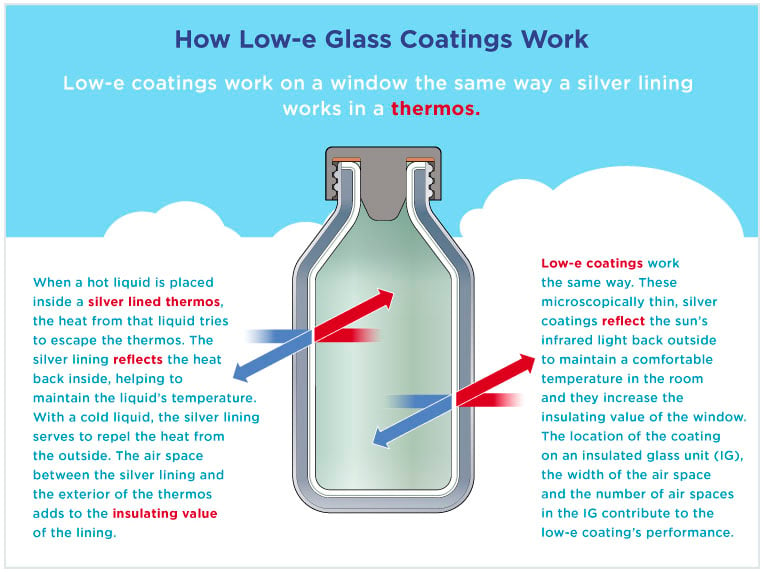
The Science Behind Low‑e Glass
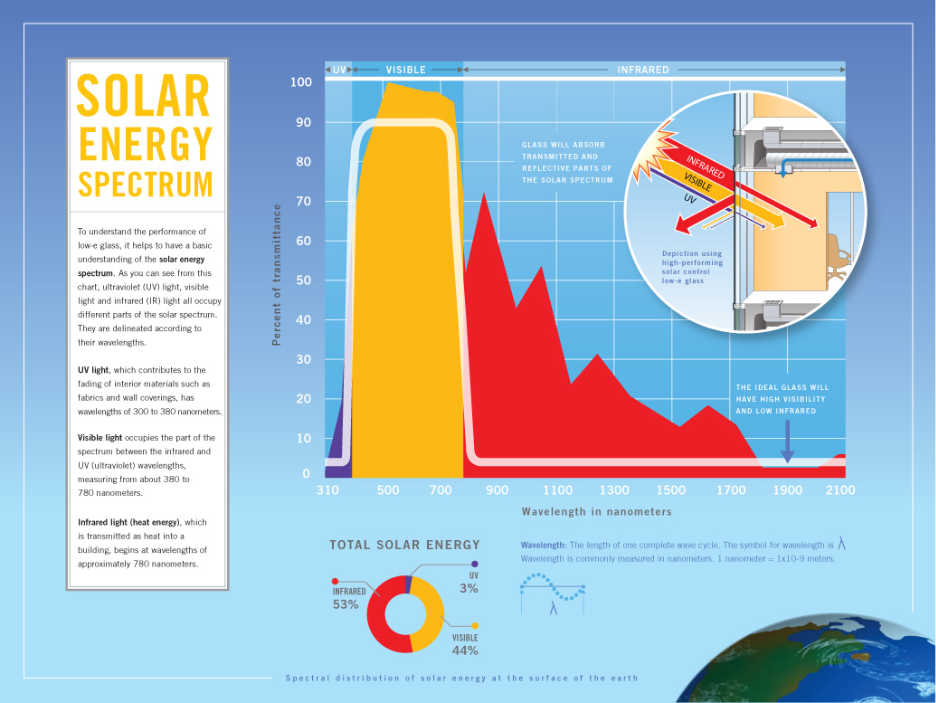
The Solar Energy Spectrum Explained
The performance of low‑e glass is best explained by understanding the different types of energy found in sunlight.
Low‑e coatings are designed to block heat and harmful UV rays while still letting natural daylight pass through the glass.
Heat Transfer and Emissivity
Emissivity measures a surface’s ability to emit radiant heat. It is expressed as a unitless value between 0 and 1, where lower numbers indicate less heat radiation.
By reducing emissivity, low‑e coatings improve thermal insulation performance and reduce heat loss or heat gain through the glass.
- Ordinary clear glass has high emissivity of approximately 0.84, allowing heat to pass readily .
- Low‑e coatings have very low emissivity, meaning heat is reflected rather than transmitted.
- Specific high‑performance low‑e glasses can reduce emissivity to approximately 0.02.
For a more in-depth description: https://glassed.vitroglazings.com/topics/the-science-of-low-e-coatings
What Are the Benefits of Low‑e Glass?
Low‑e glass improves comfort and performance across a wide range of climates and building types.
Benefits in Hot Climates
- Reduces solar heat gain coefficient (SHGC)
- Lowers cooling loads and HVAC energy use
- Improves occupant comfort near windows
Benefits in Cold Climates
- Reflects indoor heat back into the space
- Reduces heat loss through glazing
- Maintains natural light without sacrificing insulation
Benefits in All Climates
- Improved energy efficiency
- Reduced energy costs over time
- Enhanced UV protection for interiors
- Balanced daylight and thermal performance
Radiant heat transfer is one of the primary ways heat moves through windows, making emissivity control a key factor in overall window insulation performance.
Types of Low‑e Coatings
Low‑e glass performance depends on the type of coating applied. In general, low‑e coatings are designed either to maximize solar heat gain or to limit it, depending on climate, building use and energy goals.
Soft‑Coat (Sputter‑Coated) Low‑e Glass
- Applied using magnetron sputter vacuum deposition (MSVD)
- Very low emissivity
- High solar control performance
- Typically sealed inside an insulating glass unit (IGU)
MSVD technology was introduced in the 1980s and has been continually refined to improve coating performance, uniformity and consistency. Soft‑coat low‑e coatings are applied off‑line, after the glass is manufactured, in a controlled vacuum environment. During the MSVD process, multiple ultra‑thin layers of metals or metal oxides are deposited onto the glass surface with a high degree of precision. Although these layers are microscopically thin, they are engineered as part of a multilayer coating system that helps reflect infrared heat while maintaining high visible light transmittance (VLT).
This level of manufacturing control allows soft‑coat low‑e glass to achieve very low emissivity values and enhanced solar control, which is why these coatings are commonly used in high‑performance and spectrally selective glazing systems.
Hard‑coat low‑e glass offers a different balance of durability and performance compared to soft‑coat coatings.
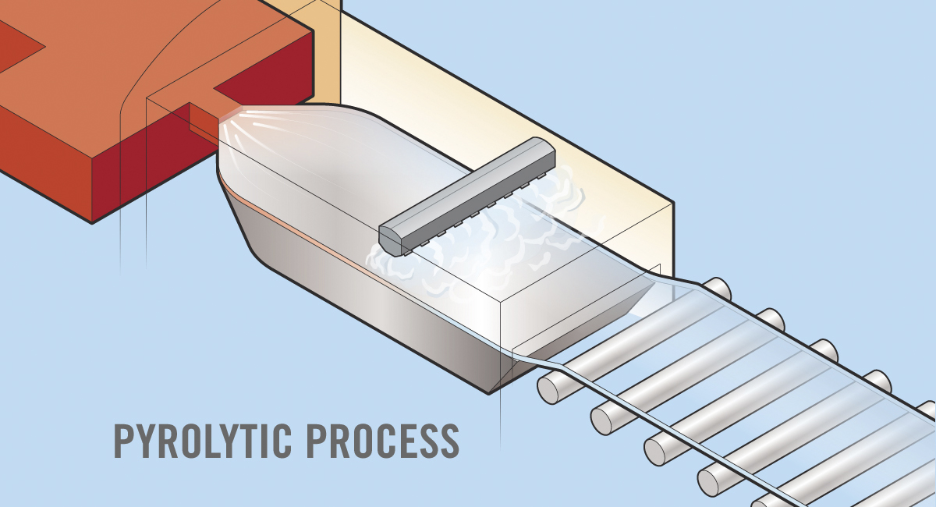
Hard‑Coat (Pyrolytic) Low‑e Glass
- Applied during the float glass manufacturing process
- More durable surface
- Slightly higher emissivity
- Often used when a durable glass surface is needed
In the pyrolytic process, the low‑e coating is applied directly to the glass ribbon while it is still hot during production. The coating chemically bonds to the glass surface, creating a durable finish that can better withstand handling and fabrication compared to soft‑coat coatings.
Pyrolytic low‑e coatings became common in architectural glass production in the early 1970s and are often associated with passive low‑e glass performance
Both soft‑coat and hard‑coat low‑e glasses contribute to improved thermal insulation and energy efficiency, but they differ in durability, emissivity levels and solar control capability. Both coating types are used in high‑performance glazing, depending on energy goals, climate and application requirements.
How Low‑e Glass Improves Energy Efficiency
Low‑e glass improves multiple glazing performance metrics simultaneously:
- U‑Value – measures overall thermal insulation
- Solar Heat Gain Coefficient (SHGC) – measures how much solar heat passes through glass
- Visible Light Transmittance (VLT) – measures daylight availability
- Light to Solar Gain (LSG) – evaluates daylight relative to heat gain
The Solar Heat Gain Coefficient (SHGC) measures how much solar energy passes through a glazing system into an interior space. This includes both energy transmitted directly through the glass and energy absorbed by the glass and later released inward.
SHGC is reported as a decimal fraction. For example, a value of 0.46, for example, means that roughly 46% of the incoming solar energy contributes to indoor heat gain and ends up inside the building. The lower the number, the less solar heat enters the space.
Optimizing these values helps reduce heating and cooling demand, supporting cooling load reduction and more efficient building envelopes.
Spectral Selectivity and Daylight Performance
Spectral selectivity describes how effectively a glazing system allows visible daylight to enter a building while limiting the amount of solar heat that passes through the glass. It is commonly evaluated by comparing visible light transmittance (VLT) to solar heat gain, measured by the solar heat gain coefficient (SHGC).
This relationship is expressed as the Light to Solar Gain (LSG) ratio, calculated by dividing VLT by SHGC. Higher LSG values indicate better performance, meaning more usable daylight is transmitted relative to the amount of solar energy entering the space. An LSG of 1.25 or greater is generally used as the minimum benchmark for classifying glazing as spectrally selective, meaning it delivers higher daylight transmission relative to overall solar energy passage.
Where and How Is Low‑e Glass Used?
Low‑e coatings are commonly incorporated into insulating glass units (IGUs) for residential and commercial construction.
Common Applications
- Low‑e windows
- Curtain wall systems
- Facade glazing systems
- Skylight glass and roof glazing
- Commercial building glass assemblies
These applications benefit from improved thermal insulation, solar control and natural light transmittance.
How Is Low‑e Glass Made?
- Base glass is produced through the float glass process
- Low‑e coatings are applied using sputter‑coating or pyrolytic coating methods
- Glass is fabricated into IGUs, laminated units
- Finished units are installed as part of the high‑performance glazing system
The low‑e coating itself is only nanometers thick but dramatically impacts glass performance.
Low‑e Glass vs. Regular Clear Glass
| Performance Factor | Regular Glass | Low‑e Glass |
|---|---|---|
| Heat Transfer | High | Significantly Reduced |
| Energy Efficiency | Low | High |
| UV Protection | Limited | Substantial |
| Solar Control | Minimal | Engineered |
| Cost Impact | Lower initial cost | Higher initial cost with long‑term savings |
Frequently Asked Questions About Low‑e Glass
Does low‑e glass keep heat in or out?
Low‑e glass reflects heat back toward its source, helping retain indoor heat in cold weather and reduce heat gain in warm conditions.
Is low‑e glass worth the cost?
Yes. In most buildings, long‑term energy savings typically outweigh the higher upfront cost.
What is the difference between low‑e and tinted glass?
Tinted glass absorbs light and heat, while low‑e glass reflects infrared heat and maintains clearer visible light transmittance.
Can low‑e glass reduce UV exposure?
Yes. Most low‑e coatings significantly reduce UV radiation that can fade interiors.
How long does low‑e coating last?
When sealed properly in an IGU, low‑e coatings last for the life of the glazing unit.
Is low‑e glass better for cold or hot climates?
Low‑e glass can be optimized for both hot and cold climates, depending on coating type and placement within the glazing system.
Key Takeaways: The Science of Low‑e Coatings
- Low‑e glass reflects infrared heat while allowing visible light to pass through
- Improves thermal insulation, solar control and overall energy efficiency
- Helps manage heat gain and heat loss to reduce heating and cooling demand
- Plays a critical role in modern architectural glazing and high‑performance building envelopes
Updated on May 26, 2026


